
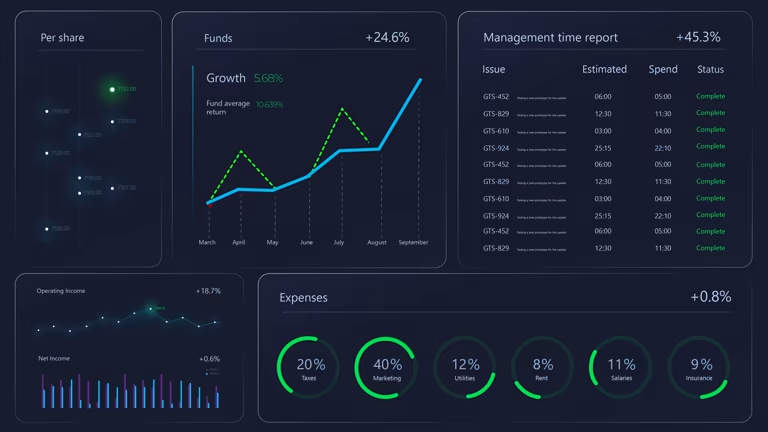

Effective investment management means always being aware of portfolio performance in conjunction with real-time market trends. The Mutual Fund Portfolio Tracker is a structured solution for keeping an eye on holding performance analysis to time up-to-date financial decisions. With performance insights derived in real-time, investors evaluate the positioning of mutual funds to achieve their financial goals according to market movements.
What is a Mutual Fund Portfolio?
A Mutual Fund Portfolio consists of several investments pooled in various schemes: equity investment plans-debt plans, hybrid plans. A mutual fund invests in several categories of securities, and in combination with the other mutual funds, they create a diversified portfolio according to the investor’s objectives and risk preferences.
Tracking the portfolio regularly gives investors insight on how the portfolio is performing returns wise as well as geography exposure and identifying underperforming schemes. Without proper monitoring, the investors are at risk of missing very fundamental trends that could affect very long-term outcomes. Digitalization of trackers brings a structured clarity into the monitoring and accounting of all investment every rupee is allocated and evaluated.
What is the Mutual Fund Portfolio Tracker?
The Mutual Fund Portfolio Tracker is an online application that aggregates all mutual fund investments in one place. It automatically connects to the investment accounts or requires adding manually fund details to create the interactive dashboard. The tracker shows real-time updates of Net Asset Values (NAVs), total amount invested, and portfolio value.
This makes it easier to clearly visualize approaches such as comparing performance across schemes, asset classes, and fund classifications. It does so by indicating patterns in resource allocation-allocation via equity, debt, or hybrid-so that an investor can ensure enhanced balance and diversification while allocating funds.
Once linked to an investor’s account, it updates, by itself, NAVs, number of units managed by the investor and returns. By gathering real-time data from fund houses and exchanges, the Investment Tracker does its work. Several Davis exist with possible display of graphs and performance metrics that constitute trend visualizations. Key features include:
- Real-time Portfolio Value: Current valuation of investments as per latest NAVs.
- Performance Breakdown: Individual funds showing details of gain or loss.
- Category allocation: A view of portfolio distribution through equity, debt, and hybrid categories.
- Goal Monitoring: Tracking the progress toward specific financial goals that are defined.
- Alerts and Notifications: Changes and updates about NAV, dividend announcements, or modifications in funds.
By embedding these features, the tracker eases the portfolio and captures real-time information for the use of investors at all times.
Advantages of Using a Real-Time Tracker
A real-time Investment Tracker shapes and organizes the investment process. It is not just a visibility provider, but also helps in giving a direction to informed decision-making.
- All in One: View All Mutual Funds These are: All mutual fund holdings from different accounts viewed in a single interface rather than going through numerous statements or tracking manually.
- Instant Insight: Investors can act promptly using real-time data, especially in volatile market conditions.
- Portfolio Tracking: The tracker will provide data showing percentage returns, fund ratings, and sector exposure-understandably guiding the investor in recognizing strength and weakness in his Mutual Fund Portfolio.
- Simplification of Rebalancing: With a clear picture of the breakdown of allocations, the investor can rebalance portfolios according to the risk level desired or asset mix.
- Continuous Monitoring: Alerts and summary performance charts promote that it is worth reviewing the performance regularly, which in turn ensures long-term discipline and keeping the goal in mind.
- Integrating goal: based planning into a Mutual Fund Portfolio Tracker may also help in the realization that goal-based investing benefits by connecting the fund with a particular financial target such as education, house purchase, or retirement, making its progress closer assessment possible.
Investment Tracker matches the actual performance against the expected growth and highlights any gaps, triggering timely amendments. Investments should serve clearly defined objectives rather than be managed in isolation.
Real-time data decision-making
Real time tracking enables people to react based on their changing market environment. For instance, when a sector underperforms compared to the previous expectations, reallocation to another fund or category is easily done with the use of the tracker. Similarly, if it is found to have been achieved before the expected date, the focus will now shift to a new set of objectives.
When real-time updates are at hand, even guesswork-heavy activities in investment management get obliterated. That turns investment, from being reactive, into proactive and data-driven processes.
Conclusion
The Mutual Fund Portfolio Tracker is about making investments simple, giving everyone a unified real-time view of holdings and performance. It should be coupled with an Investment Tracker, which will enable the monitoring of returns and expected risks versus strategy adjustments. Real-time data and systematic tracking keep the investor well-informed, disciplined, and focused on achieving his financial goals with clarity.

